


RBM Partnership to End Malaria annual workshop in Kenya
SORA Technology participated and Chief Mosquito Officer spoke as a panelist.
SORA Technology Co., Ltd. (Headquarters: Nagoya, Japan; Founder & CEO: Yosuke Kaneko; hereafter “SORA Technology”), which provides advanced drone and AI solutions across public health, agriculture, and climate resilience, announced that SORA Technology participated in 21st Rolling Back Malaria (RBM) Partnership to End Malaria annual workshop held in Nairobi, Kenya, from 3-5 March 2026, as one of the sponsors.
The annual workshop offers a platform for the malaria vector control community to share the latest best practices and research relevant to current and future malaria vector control operations. The activities of the dedicated Work Streams, which focus on their work plans, are complemented by plenary sessions and panel discussions (Details).
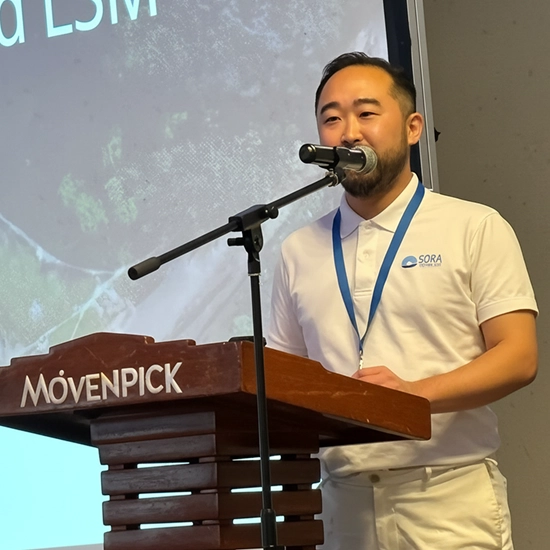
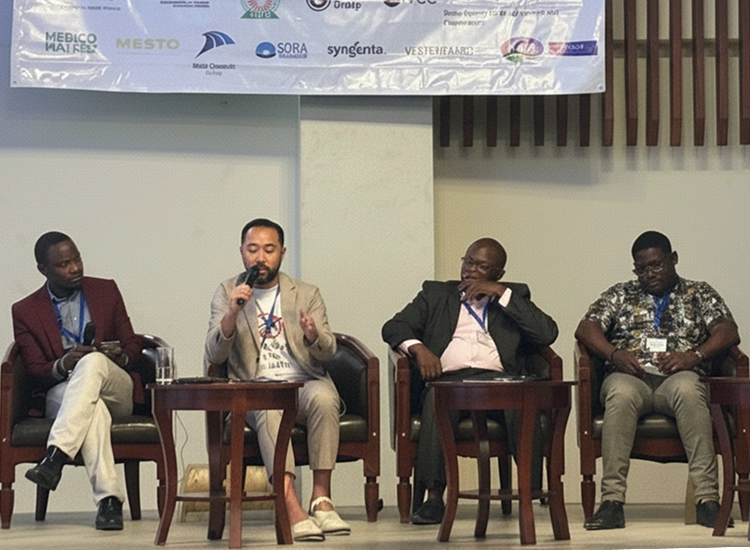
In the workshop, our Chief Mosquito Officer (CMO), Mr. Masahiro Yamaguchi participated as a panelist in a panel discussion of the Vector Control Working Group (VCWG), titled “Explore emerging themes in the LSM (Larval Source Management) space: Tech-enabled larviciding, Community engagement, Innovative financing mechanisms,” together with Mr. Chris Atta-Obeng (NMEP* Ghana), Dr. Aminu Mahmoud Umar (NMEP Nigeria), and Dr. Emmanuel Hakizimana (Rwanda Biomedical Center). (*NMEP: National Malaria Elimination Programme)
Mr. Yamaguchi introduced SORA Technology’s innovative LSM, an tech-led approach that uses drone and AI to map target areas to identify water bodies with a high risk of mosquito breeding and supporting the targeted application of larvicide to those high-risk sites. He also presented evidence on the cost-effectiveness of the field evaluation of SORA Technology’s LSM in Ghana (see reference here).
In addition to highlighting the benefits of introducing SORA Technology’s LSM, Mr. Yamaguchi referred to the Comprehensive Larviciding Evaluation and Assessment Framework (CLEAR) developed by the Malaria Elimination Initiative (MEI) as a methodology for evaluating LSM interventions. He emphasized the importance for National Malaria Control Programmes to incorporate CLEAR-based surveillance and monitoring and evaluation (M&E) when adopting tech-enabled LSM strategies as part of their long-term national malaria vector control policies.